Why Recycle e-Wastes?
Many components of electronic products contain hazardous materials such as mercury, cadmium, zinc aluminium, nickel or copper. When these electronics end up in the landfills, the chemicals are released into the soil during rains or are released into the atmosphere when burned. Almost 99% of the components of a computer can be recycled. Recycling can avoid serious toxins, chemicals and heavy metals from going to landfills and polluting the environment. Chemicals, like cadmium which is used in batteries, can cause cancer in human or the chromium used to prevent corrosion can cause liver and kidney damages as well as skin reactions. In order to prevent hazardous chemicals from leaking into soil, computer and electronic equipment and parts must not be thrown together with other domestic thrash.
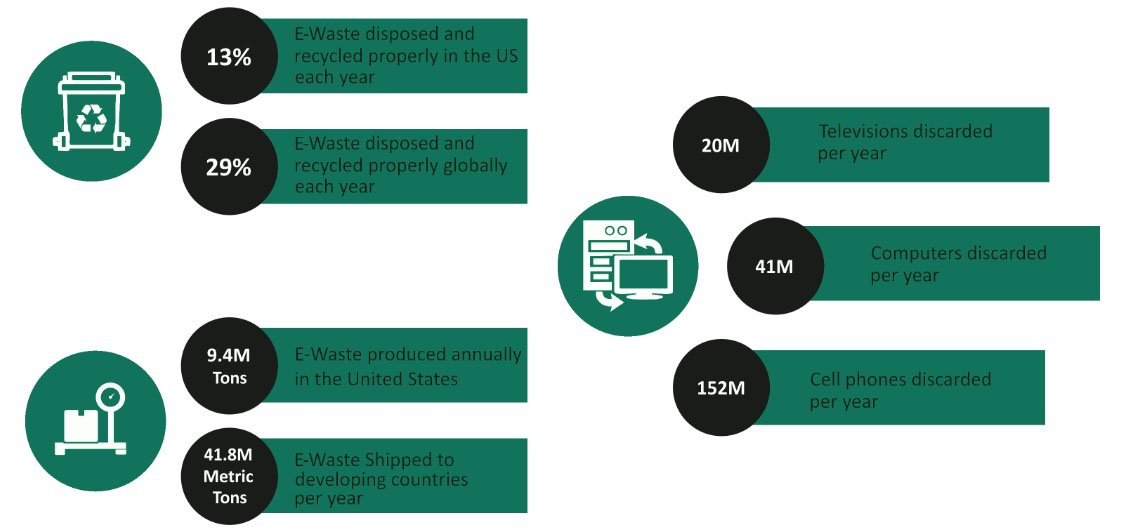
E-Waste Global Collection Story
Asset Refurbishment
Sustainable recycling comprises of three R’s i.e. Reduce, Reuse and Recycle. Refurbishment or repair of used electronic assets to bring them back to life is the lease polluting process of responsible recycling.
Data Destruction
Sustainable recycling comprises of three R’s i.e. Reduce, Reuse and Recycle. Refurbishment or repair of used electronic assets to bring them back to life is the lease polluting process of responsible recycling.
Reverse Logistics
Sustainable recycling comprises of three R’s i.e. Reduce, Reuse and Recycle. Refurbishment or repair of used electronic assets to bring them back to life is the lease polluting process of responsible recycling.
What We Collect
Telco
- Radio Equipment
- Microwave
- BSC, TRC MSC, HLR, SCP, FNR, TSC, STP
- Mobile Phone
Home Appliance
- Television/Monitor
- Desktop Computer, Laptop
- Air Conditioner, Fridge, Oven, Blender
- CC Camera, DVR, LED
- Battery
Medical E-Waste
- X-Ray, ECG analyzer
- Laboratory Equipment
Other E-Waste
- Generator
- Power Supply, IPS, UPS
- Vehicle accessories
Our Recycling Process
Consecutive Procedures
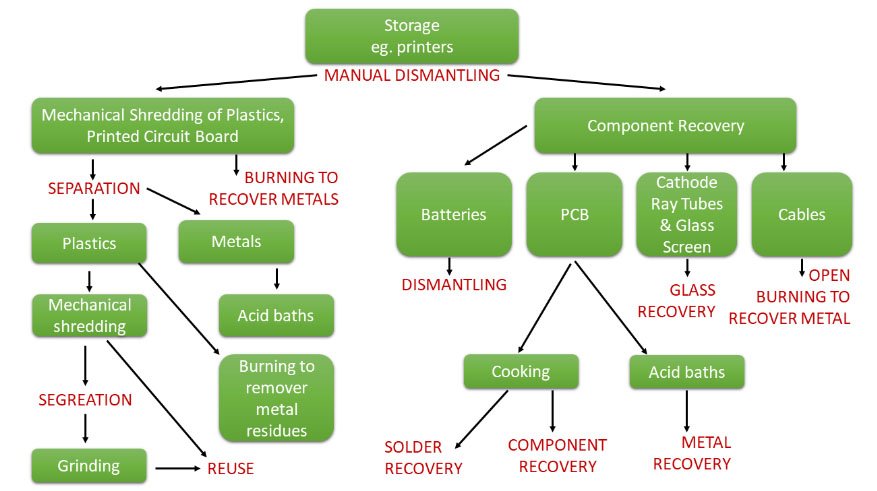
WEEE Society follows the most advance recycling processes-
- The main process is to collect and store the wastes.
- The shredding is done by separation of the plastics and metals and other materials are brunt.
- From plastics mechanical shredding are done again and afterwards it is reused.
- Some materials cannot be reused after secondary mechanical shredding for that after the shredding the materials are segregated and grinded then it is reused.
- After separation the metals are processed with acid baths and the plastics are brunt to recover metals residues.
- In the component recovery process the batteries, printed circuit boards, cathode ray tubes, cables are separated and collected.
- The printed circuit boards are either cooked or it is processed with “acid bath”. When the PCB’s are cooked there are two recoveries, one is solder recovery and another one is metal recovery from plastics.
- The cathode ray and glass screens are processed with “acid bath” and “glass recovery” thus the metals are recovered from plastics.
- The cables are open burnt to recover metal.